
Reviewed · SURF LESSONS
Beginner Surf Classes
Catching your first wave is the easy part to dream about. The useful part of this class is learning why a wave is worth catching, where the current runs, and how to stand safely. Instructors such as Alex, Josue, Angel, Jose, and Jake focus on simple steps, then coach you in the water.
I like the small maximum group of eight and the flexible schedule, since surf conditions and your own energy can shape the session. I also like that water safety is part of the lesson, not an afterthought. The main consideration is the changing beach location: beginners may go to Playa Dominical, while stronger surfers may be sent to Dominicalito, where rocks can make entry less comfortable.
Key points to know before you book
- Two hours for $70: A reasonable first lesson price when you value hands-on coaching, equipment, water, and snacks.
- Beach choice depends on ability: Beginners may use Playa Dominical, while intermediate and advanced surfers may be directed to Dominicalito.
- Safety comes first: Expect instruction on currents, rip tides, board control, wave choice, and how to protect other people in the water.
- Small groups help: The maximum is eight, and past sessions have included close coaching in the water.
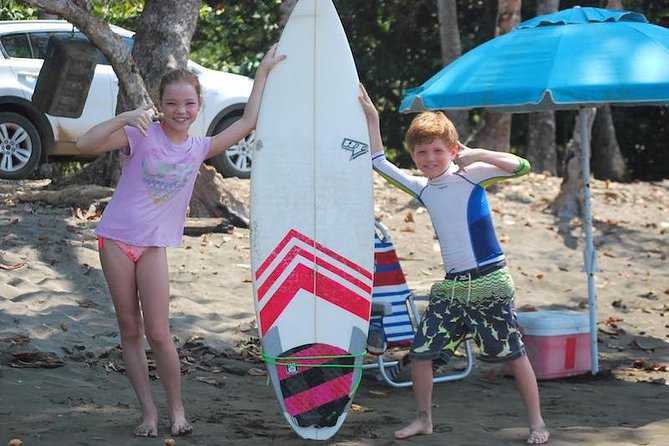
- Good for older beginners and children: Instruction has helped first-time surfers over 60 and a child as young as five and a half.
- The daily time can change: Confirm your exact start time and beach, since the schedule is not fixed each day.
What this Dominical surf lesson actually teaches
A beginner surf class can mean little more than a board, a push into whitewater, and a cheerful goodbye. This one aims higher. The lesson begins with the basics of the ocean and board handling, then moves toward catching waves with better timing.
You can expect the instructors to explain how to read the water before you paddle out. That includes currents, rip tides, wave shape, and the sort of conditions that call for caution. You also practice the motion of standing on the board on land, which gives you a chance to work out your foot position before the board starts moving.
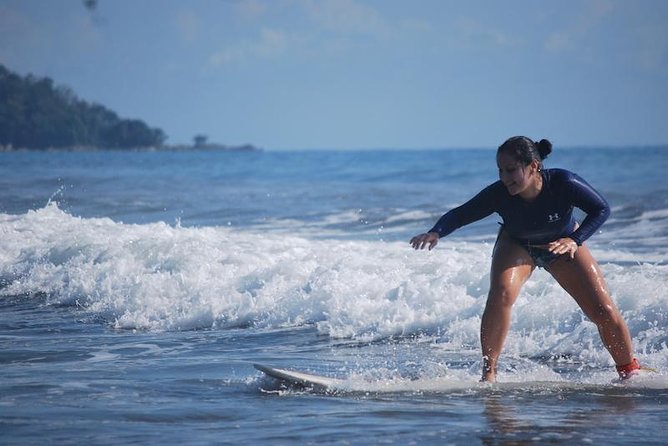
That preparation matters. New surfers often look down at the board while trying to stand. Angel gave one student a useful correction: look toward a tree or another point ahead instead of staring at the nose. That small change helped the surfer catch two waves in a row. It is the kind of practical advice that can turn confusion into progress.
In the water, the coaching centers on timing. You need to feel when the wave begins to carry the board, then stand without rushing. With an instructor nearby, you get feedback on when to paddle, where to look, and how to adjust your balance.
More surf lessons along Quepos:
- Surf Lessons in Manuel Antonio
★ 5.0 · 91 reviews - Surf Lesson by South Surf Costa Rica
★ 5.0 · 53 reviews - Surf lessons at Manuel Antonio Beach
★ 5.0 · 39 reviews
Choosing between Playa Dominical and Dominicalito
The operator places beginner surfers at Playa Dominical and intermediate or advanced surfers at Dominicalito Beach. The exact plan can change from day to day, so ask where your class will take place when you confirm the booking.
Playa Dominical is presented as a good setting for introductory surfing and can also suit stronger surfers as they improve. The important benefit for a first-timer is manageable surf paired with direct instruction. You want waves that let you practice without feeling overwhelmed, and the class is designed around that goal.
Dominicalito has also been used for beginner sessions, especially when the conditions are right. It has a drawback worth knowing: one family found many rocks in the water. That does not make the beach unsuitable, but it means you should pay closer attention to entry instructions, board control, and where you place your feet.
The stated itinerary lists Dominicalito Beach, while the general instructions distinguish between beginner and more advanced groups. That mismatch is a good reason to confirm the beach rather than assume you will surf at one particular spot. A changing location may be useful if it helps the instructor find better conditions, but you should know what to expect before you arrive.
The beach lesson, step by step
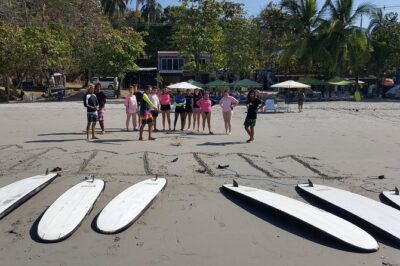
The first stage is a land briefing. You learn basic board control and how to move from lying on the board to standing. This is also where the instructors explain currents and rip tides, along with the safety habits needed in a shared surf area.
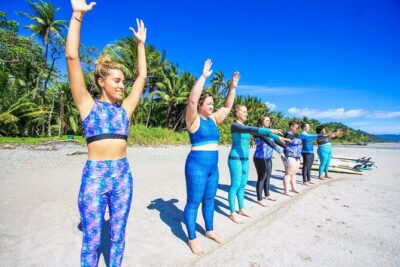
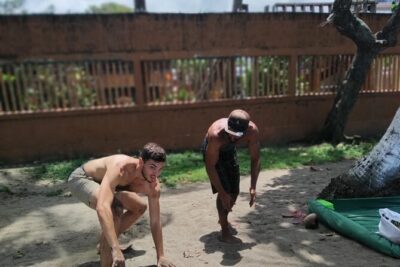
You then practice the standing motion on the sand. The class breaks the movement into pieces instead of asking you to copy a quick demonstration and hope for the best. That approach has helped older beginners, including people in their 60s, feel more prepared before entering the water.
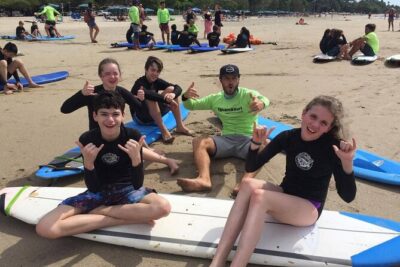
Next comes the ocean session. Instructors have been praised for staying close and giving frequent feedback, with some groups receiving one instructor for every one or two students once in the water. The exact ratio can vary, but the group limit of eight keeps this from becoming a crowded mass lesson.
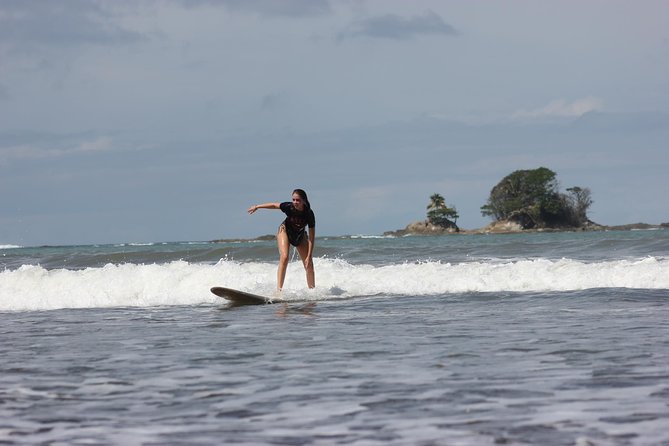
The goal is not perfect surfing in two hours. It is a useful first connection with the sport: catching a few waves, learning how the ocean behaves, and leaving with a clearer idea of what to practice next. Some first-timers have stood within minutes, while others may need more time. Your result will depend on conditions, fitness, balance, and how quickly the standing motion makes sense to you.
Why the safety briefing is worth your time
Surfing looks simple from the beach. In the water, several things demand attention at once. You need to manage the board, watch other people, judge the wave, and notice currents that may move you away from your starting point.
This class puts those concerns into the lesson. The instructors explain rip tides, current patterns, board control, and how to react to dangerous conditions. That is especially valuable if this is your first time in the ocean with a surfboard.
The emphasis on safety also extends beyond the lesson itself. One group saw instructors pause their water coaching to address suspicious activity near parked cars. That interrupted the session briefly, but it showed that the team pays attention to the wider setting, not only the waves.
You should still take responsibility for simple precautions. Apply plenty of sunscreen, especially to your face, and consider wearing a rash guard. Bring a reusable water bottle if you prefer one, even though bottled water is provided.
A few more Quepos half-days worth weighing up
- Savegre River Rafting Class II-III from Manuel Antonio
★ 5.0 · 80 reviews - Whitewater Rafting Savegre River Class II & III + Waterfall Break
★ 5.0 · 41 reviews - Cooking and Salsa Dance Lesson Combo
★ 5.0 · 90 reviews - Sloth Tour in La Fortuna and Tortillas Cooking Class
★ 5.0 · 88 reviews
The instructors and their teaching style
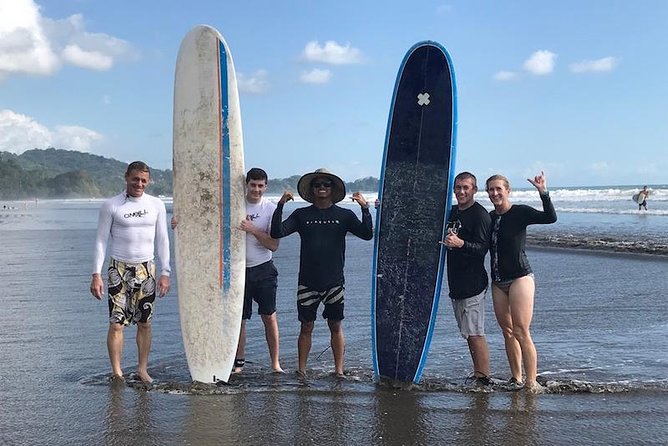
Several instructors are named in the feedback, including Alex, Josue, Angel, Jose, Sabina, and Jake. Their strengths are consistent: patience, clear explanations, encouragement, and close attention to safety.
Alex and Josue have taught middle-aged beginners and helped them get upright within about an hour. Their method begins with beach instruction, followed by practice on land and coaching in the water. This progression suits you if you want a clear structure instead of a casual push toward the waves.
Angel has been singled out for patient, precise corrections. His advice about looking ahead rather than at the board is a good example of useful coaching that is easy to remember after the lesson. He also worked with a first-time surfer who was nervous about the experience and helped build confidence through repeated encouragement.
Jake’s approach goes beyond the mechanics of standing. He has explained how to read surf forecasts, what those forecasts mean for a beginner, which waves to choose, and how to respond when conditions become unsafe. If you hope to continue surfing after this class, that broader ocean awareness adds real value.
English communication has also been described as easy with the instructors. That matters when safety instructions need to be understood quickly and clearly.
Is $70 a fair price for two hours?
At $70 per person, this is not the cheapest possible introduction to surfing. You are paying for more than time on a board, though. The price includes a two-hour lesson, instruction on land and in the water, bottled water, and snacks.
The strongest value comes from the coaching. If you simply want to rent a board and experiment, a lesson may feel expensive. If you want to understand wave timing, avoid common mistakes, and learn how to handle currents, guided instruction can save you a frustrating morning.
The maximum group size is eight, but some sessions have had much closer coaching in the water. That makes the price more appealing for a first lesson, particularly if you are nervous or want specific feedback. A large group with little instructor contact would be a weaker deal, so confirm the expected group setup if personal attention is your main reason for booking.
You should also consider the flexible timing. The operating window is listed as 7:00 AM to 5:00 PM, Monday through Sunday, but the actual time can change each day. That flexibility may help you fit surfing around other plans, though it means you should not treat the published hours as your exact lesson time.
Who will enjoy this most?
This class is a strong fit for first-time surfers who want support rather than a quick introduction with little explanation. You will benefit most if you appreciate learning the reasons behind each step and want to leave with basic ocean awareness.
It also suits older beginners. Age is not treated as a barrier, and instruction has helped people in their 60s stand and ride. You still need to decide if you are comfortable with the physical demands of getting on and off a board and entering the water.
Families can consider it as well. A child aged five and a half was taught with close attention and stood on the board within the first 15 minutes. That does not guarantee the same result for every child, so parents should use the child’s confidence, comfort, and interest as the guide.
Couples and small groups should find the format easy to share. The lesson is social without requiring you to sacrifice all personal instruction. More advanced surfers may also find value in the class, especially at Dominicalito, but you should confirm that the session is suited to your level.
What may frustrate you
The biggest issue is uncertainty over timing and location. The time can change every day, and the information describes both Playa Dominical and Dominicalito depending on ability. That flexibility may help the operator respond to conditions, but it requires you to confirm the details.
Dominicalito can have rocks in the water. If that is your assigned beach, listen carefully to the entry briefing and ask where the safest access point is. A beginner who expects a smooth sandy entry could find this uncomfortable.
Two hours passes quickly. The lesson includes the beach explanation, land practice, and ocean coaching, so your actual wave time will be only part of the session. That is appropriate for a first class, but you should not expect a full day of surfing or advanced technique work.
Finally, the class depends on good weather. If conditions cause a cancellation, you are offered another date or a full refund. That is fair, but it can disrupt a tightly planned Costa Rica schedule.
Meeting point, timing, and cancellation details
The activity starts and ends at the Costa Rica Explorer meeting point on Main Street in Dominical, Puntarenas Province. The highlights also identify the Domi Plaza Complex as the central meeting point, so check the exact arrival instructions after booking.
The listed operating hours are 7:00 AM to 5:00 PM, Monday through Sunday. The daily lesson time is variable, so do not arrive based only on the broad opening hours.
Booking confirmation normally arrives at once. If you book within 12 hours of the lesson, confirmation comes as soon as possible and depends on availability. The maximum is eight people, and most people can participate.
You can cancel up to 24 hours before the start time for a full refund. Changes or cancellations inside that 24-hour window are not accepted for a refund. Cut-off times use local time.
Should you book this surf class?
I would book it if you want a patient first lesson with real attention to ocean safety, rather than a quick photo opportunity on a board. The strongest reasons are the small maximum group, the practical teaching, and the instructors’ ability to work with older beginners, children, and nervous first-timers.
I would pause if you need a fixed time, a guaranteed beach, or a smooth sandy entry. Confirm the location, start time, and expected conditions before paying. Also bring sunscreen and a rash guard, and be ready for the possibility of rocks at Dominicalito.
For $70, this is a good value when your aim is to learn the basics and catch a few waves with support. It is less suitable if you already surf confidently or want a long, independent session. For most first-timers near Dominical, the safety instruction and close coaching make it a sensible way to begin.
FAQ
Where does the surf class meet?
The meeting point is Costa Rica Explorer on Main Street in Dominical, Puntarenas Province. The Domi Plaza Complex is also identified as the central meeting point, so confirm the precise location with the operator.
Where do beginners surf?
Beginners are generally taken to Playa Dominical. The beach can change depending on the day and conditions, so confirm the location before your lesson.
Where do intermediate and advanced surfers go?
Intermediate and advanced surfers are taken to Dominicalito Beach according to the activity information.
How long does the class last?
The surf class lasts approximately two hours.
How much does the lesson cost?
The price is $70 per person.
What is included?
Bottled water and snacks are provided. The activity also includes surf instruction on the beach and in the water.
How many people can join?
The maximum group size is eight people.
Is the lesson suitable for children?
Most people can participate, and a five-and-a-half-year-old has taken the class successfully. The provided information does not state a minimum age for every booking, so confirm your child’s eligibility when reserving.
What happens if the weather is poor?
If poor weather causes the activity to be canceled, you can choose another date or receive a full refund.
Can I cancel for a full refund?
Yes. Cancel at least 24 hours before the local start time for a full refund. Cancellations or changes made less than 24 hours before the start time are not accepted for a refund.
Just added around Quepos
- Savegre River Rafting Private Trip from Manuel Antonio★ 5.0 · 61 reviews
- Surf lessons at Manuel Antonio Beach★ 5.0 · 39 reviews
- Boat Parasailing with Aguas Azules★ 5.0 · 56 reviews
- Transfer from Manuel Antonio to SJO Airport and surroundings★ 5.0 · 34 reviews
- Surf Lesson by South Surf Costa Rica★ 5.0 · 53 reviews
- Whitewater Rafting Savegre River Class II & III + Waterfall Break★ 5.0 · 41 reviews
- Private Transfer From Manuel Antonio To La Fortuna From 1 to 6 passengers★ 5.0 · 64 reviews
- Private One Way Transfer from Manuel Antonio to San José (Airport SJO)★ 5.0 · 39 reviews
Surf Lessons, compared.
Surfing Lessons in Tamarindo by Tidal Wave Surf Academy
Read our review →
Browse the lists this tour appears in