
Reviewed · MANGROVE TOURS
Mangrove Damas Island Kayak Tours
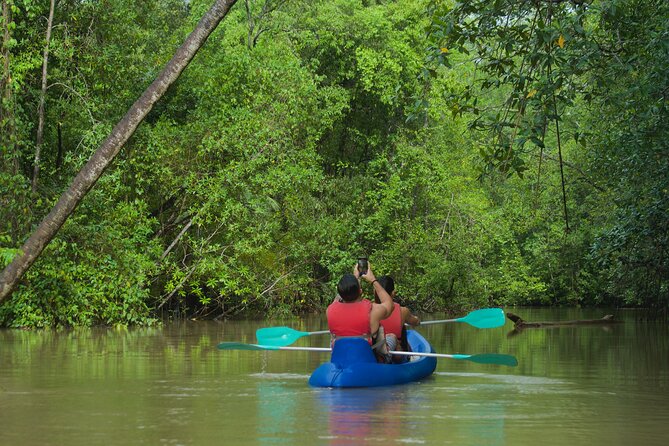
The best part of this outing is its quiet setting. You paddle through the Damas Island mangrove channels, where tidal water moves beneath tangled roots and guides point out birds, iguanas, crabs, monkeys, and other wildlife. This is not a fast ride or a thrill-seeking water sport. It is a slow look at one of Costa Rica’s most important coastal habitats.
I like the bilingual naturalist guides, especially Marlon Erick Gonzalez Araya, known as Mega, who combines nature lessons with easy conversation. I also like the meal after the paddle, a welcome reward after several hours on the water. The main thing to consider is timing: the start depends on the tides, so an early morning outing is not guaranteed, and afternoon rain can affect the experience.
Key points to know before you book
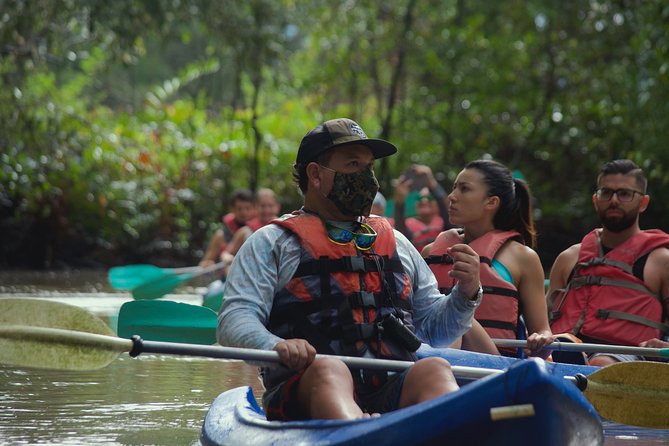
- Tidal mangrove paddling: Your route and start time can depend on the movement of the water.
- Wildlife watching: You might see capuchin monkeys, an anteater, birds, iguanas, and crabs, though sightings are never guaranteed.
- Guide quality: Bilingual naturalist guides explain the ecosystem, and Mega is singled out for his patience, humor, and local knowledge.
- Four hours on the water: You need moderate fitness and enough comfort to paddle an open-seat kayak for several hours.
- Family option: Children over 7 can participate, but they must share a double kayak with an adult.
- Manuel Antonio convenience: Hotel pickup and drop-off are included in the Manuel Antonio area.
Why the Damas Estuary is worth your morning
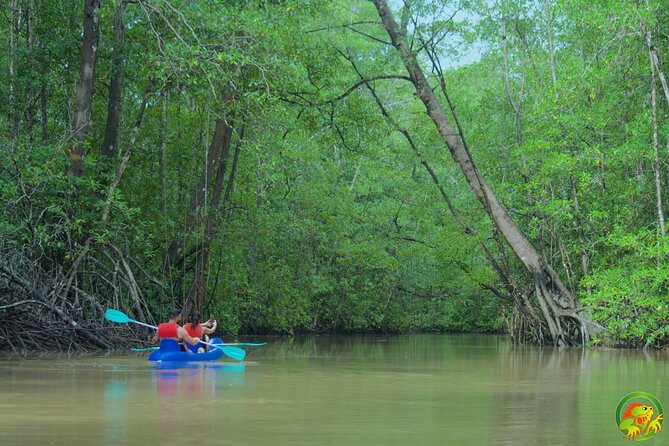
The Damas Estuary gives you a different side of the Quepos area. Instead of open Pacific views and busy beaches, you enter sheltered inland waterways lined with mangrove trees. The pace is gentle, and the narrow channels make you feel close to the water and the plants that hold this wet ecosystem together.
I like this kind of outing because it asks you to slow down. You paddle with the currents, listen for movement in the trees, and let your guide explain what you are seeing. The mangroves are not simply scenery. They provide shelter for wildlife and form a useful link between the river and the sea.
Your guides are bilingual naturalists, so you can expect more than directions on how to paddle. Marlon Erick Gonzalez Araya, called Mega, is one guide associated with the experience. He is described as entertaining, patient, and happy to speak slowly with visitors who want to practice Spanish. That can make the trip feel more personal than a standard boat ride.
The setting is peaceful, but do not confuse peaceful with effortless. You will be in an open-seat kayak for a few hours. The tour calls for moderate physical fitness, and you should be ready to use your arms and maintain a steady pace.
More mangrove boat and kayak trips in Quepos:
- Damas Island Mangrove Kayaking Tour from Manuel Antonio
★ 4.5 · 89 reviews - Damas Island Mangrove Boat Tour with Wildlife from Manuel Antonio
★ 5.0 · 75 reviews - Paddle Through Paradise: Mangrove Kayak Adventure
★ 5.0 · 61 reviews
Starting at Isla Damas
The outing begins at Isla Damas, with the meeting point listed at Av. 4 297 in Quepos. Hotel pickup and drop-off are available in the Manuel Antonio area, which is useful if you are staying near the park or along the nearby hotel strip. The activity ends back at the meeting point.
The scheduled operating window runs from 5:00 a.m. to 11:00 a.m., but the exact start can shift because of the tides. One account describes a midday start before afternoon rain, despite the hope for an early morning paddle. That detail matters. If you have your heart set on first light, ask about the tide schedule before booking.
Once you reach the launch area, expect preparation for an open-seat kayak and an explanation of the basic paddling routine. The supplied information does not give a detailed launch procedure, so you should allow time to get comfortable before the group moves into the channels.
The tour lasts about four hours. That includes the paddling portion, wildlife watching, interpretation from the guide, and the food provided as part of the outing. The exact meal schedule is not laid out in detail, but a satisfying meal after the kayaking is part of the experience described.
Paddling through the mangrove channels
The central activity is simple: you paddle along the Damas Estuary with the water and follow the guide through protected mangrove habitat. An open kayak gives you a close view of the water and roots, but it also leaves you more exposed to sun and spray than a covered boat.
I would bring a camera, but use a waterproof pouch or another secure method to protect it. The tour specifically encourages you to bring one, and the wildlife can appear suddenly. At the same time, you should be ready for the possibility that an animal stays hidden. A mangrove trip rewards attention, not a guaranteed checklist.
The guide’s role is especially important here. Mangrove waterways can look similar from one turn to the next, and a good guide helps you understand what you are looking at. You may learn about the mangrove habitat, local conditions, and the animals that use the trees and channels.
The currents add another small layer of interest. You are not simply paddling in a straight line on a calm lake. The tide can influence both the timing and the feel of the route. That is why a flexible attitude helps. The water may be easy and peaceful in one section, then require more effort in another.
Wildlife you might see along the way
Wildlife is a major reason to choose this tour, but sightings depend on weather, timing, and luck. Recorded sightings include a family of capuchin monkeys, an anteater curled in distant trees, birds, iguanas, and crabs. Sloths and monkeys are possible, but they are not promised on every departure.
The capuchin sighting shows how the outing can work at its best. You may be paddling quietly when movement in the trees catches your eye. The anteater was seen at a distance, which is a useful reminder to bring a camera with a zoom lens if you have one, but do not expect every animal to pose close to the kayak.
Birds and smaller creatures may be easier to spot than larger mammals. Iguanas and crabs can add interest even when monkeys remain out of sight. Your guide can help you notice the details you might miss on your own.
I like that the outing does not depend only on one famous animal. If you do not see a sloth, the mangrove itself still gives you something to study. Look at the roots, the narrow water passages, and the way the guide explains the relationship between the estuary and the surrounding habitat.
More Kayak Tours in Quepos
- Paddle Boarding & Waterfall Full Day Tour
★ 5.0 · 37 reviews - Canoe tour dentro del Parque
★ 5.0 · 86 reviews - Kayak to the Heart of the National Park
★ 4.5 · 79 reviews - Wildlife Safari Float by Kayak in Peñas Blancas River from Arenal
★ 5.0 · 79 reviews
Mega and the value of a strong guide
A naturalist guide can make or break a wildlife tour, and this experience puts real weight on that role. Mega is praised for being friendly, informed, entertaining, and passionate about the mangroves. He also helped one visitor share a double kayak and handled the paddling, which may be useful for someone who is less confident on the water.
That does not mean you should assume the guide will paddle for everyone. The stated expectation is that you should be reasonably fit and able to paddle for a few hours. If you need special help, ask before booking rather than relying on an informal arrangement.
The bilingual format is another plus. Mega is described as speaking slowly and patiently with someone practicing Spanish. You can expect the guide to communicate in both English and Spanish, though the amount of each language may vary with the group.
The guide also adds a human element to the outing. You are not only moving through the trees. You are learning how the area works and having a chance to ask questions. For many people, that personal connection will be worth more than a faster wildlife tour with less explanation.
The meal after the water
Food is included, and a meal after the kayaking is described as satisfying and delicious. The provided details list breakfast, lunch, dinner, and snacks as included items, though they do not specify exactly which meal is served on every departure. Confirm the day’s meal plan when you book if food timing matters to you.
This is a practical benefit, not just a pleasant extra. Four hours of paddling can leave you hungry, especially in warm weather. Having food arranged means you do not need to plan a separate stop immediately afterward.
Bring water unless the operator tells you otherwise, since the supplied details do not specify the drink service. Also pack sun protection. A hat, sunscreen, comfortable clothing, and water shoes are recommended, and your clothing may get wet.
A towel is worth carrying too. You may not be soaked, but open kayaks and water-level paddling make damp clothing possible. Keep electronics protected, even if the weather looks fine at the start.
Price, group size, and overall value
The price is $70.20 per person. For roughly four hours, that includes a local guide, the kayaking experience, food, and hotel transportation in the Manuel Antonio area. That makes the cost reasonable if you value interpretation, wildlife watching, and convenience rather than simply renting a kayak.
The maximum group size is 30 people. That is not a tiny private outing, so you should not expect complete solitude or constant one-on-one time with the guide. Still, the kayak format can spread the group along the water, and the natural setting does much of the work.
The value improves if you are staying in Manuel Antonio and would otherwise need to arrange transport to Quepos. Pickup and drop-off remove one extra task. The value is less clear if you want a private paddle or a very small group, since the experience can include up to 30 participants.
It is also a good fit for people who want an active nature outing without committing to a full-day expedition. Four hours gives you enough time to see the estuary at a relaxed pace, but leaves room for another activity later.
What to wear and bring
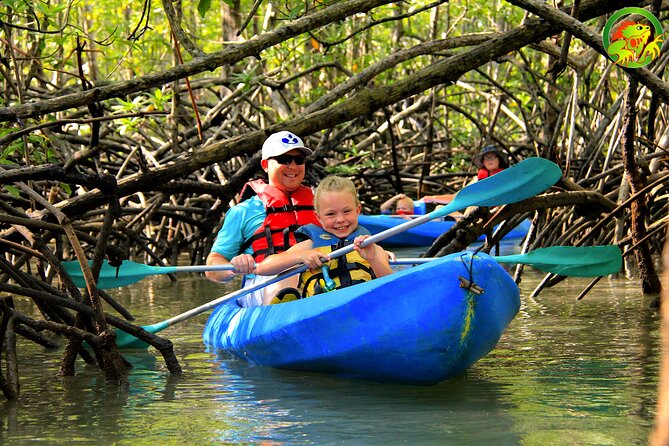
You should dress for warm, wet conditions. Comfortable clothing and water shoes are recommended, and your shoes may get wet. A hat and sunscreen are especially important because an open kayak offers limited shade.
Bring:
- A towel
- Sunscreen
- A hat
- A camera protected from water
- Comfortable clothing that can handle splashes
- Water shoes
- Any personal water or snacks you need, unless the operator confirms they are supplied
You do not need to dress for a formal tour. Practical clothing is the right choice. Avoid bringing loose items that could fall into the water, and secure your camera before launching.
Children over 7 can join, but they must share a double kayak with an adult. Families should think about the child’s comfort with several hours of paddling, sun, and changing weather. The tour is described as suitable for families and groups of different ages, but the minimum age and physical requirement still matter.
Weather, tides, and the few drawbacks
The biggest uncertainty is timing. The outing may not begin at the hour you first imagine because the tides guide the schedule. If you need a precise early departure, check the planned start before paying.
Rain is another factor. The tour requires good weather, and poor conditions can lead to a new date or a full refund. Even when the trip operates, afternoon rain may affect comfort and visibility. Costa Rica’s wet weather can arrive quickly, so a waterproof layer or dry change of clothes is sensible.
Wildlife also remains unpredictable. You might see monkeys, an anteater, birds, iguanas, and crabs, but no one can guarantee a sloth or close animal encounter. I would book this for the setting and the guide, with wildlife as a welcome bonus.
Finally, several hours in an open kayak will not suit everyone. If you dislike repetitive paddling, sun exposure, or damp clothing, you may prefer a shorter boat-based outing. If you enjoy active nature trips and do not need every minute tightly scheduled, the slower rhythm is part of the appeal.
Cancellation and booking advice
You receive confirmation when you book, and free cancellation is available up to 24 hours before the start time for a full refund. Cancellations or changes made less than 24 hours before the start are not refundable.
The operator can cancel for poor weather or because the minimum number of participants is not reached. In that case, you can choose another date or experience, or request a full refund. Since the tour is booked an average of 26 days ahead, reserving early is sensible during a popular Costa Rica visit, especially if your schedule is tight.
Should you book the Damas Island kayak tour?
I would book this tour if you want a calm, guided look at Costa Rica’s mangroves and you are comfortable paddling for several hours. It is especially well suited to families with children over 7, couples, small groups, and anyone who wants a naturalist guide rather than a simple equipment rental.
The strongest reasons to go are the peaceful setting, the chance to see varied wildlife, the bilingual guidance, and the meal afterward. Mega’s patience and easy conversation are useful bonuses, particularly if you want to practice Spanish.
I would hesitate only if you need a guaranteed early morning start, a private group, or a completely dry and effortless outing. For everyone else, the $70.20 price offers a solid half-day experience, with transportation and food included. Go with flexible timing, protect your camera, and let the mangrove ecosystem set the pace.
FAQ
Where does the Mangrove Damas Island Kayak Tour take place?
The tour takes place at the Damas Island Estuary near Quepos, Costa Rica.
How long does the tour last?
The experience lasts approximately four hours.
What time does the tour operate?
The listed operating window is Monday through Sunday from 5:00 a.m. to 11:00 a.m. The exact start can depend on the tides.
Where is the meeting point?
The meeting point is Av. 4 297, Provincia de Puntarenas, Quepos, Costa Rica. The activity ends back at the meeting point.
Is hotel transportation included?
Yes. Hotel pickup and drop-off are included for hotels in the Manuel Antonio area.
What animals might I see?
Possible sightings include capuchin monkeys, an anteater, birds, iguanas, and crabs. Sloths and monkeys are possible, but sightings are not guaranteed.
Can children join the kayak tour?
Children over 7 can participate. They must share a double kayak with an adult.
How fit do I need to be?
You should have a moderate level of physical fitness and be comfortable paddling an open-seat kayak for a few hours.
What should I bring?
Bring comfortable clothing, water shoes, sunscreen, a towel, a camera, and a hat. Your clothing and shoes may get wet.
What is the cancellation policy?
You can cancel at least 24 hours before the start time for a full refund. Poor weather or an insufficient number of participants may also lead to a rescheduled experience or full refund.
Just added around Quepos
- Savegre River Rafting Private Trip from Manuel Antonio★ 5.0 · 61 reviews
- Surf lessons at Manuel Antonio Beach★ 5.0 · 39 reviews
- Boat Parasailing with Aguas Azules★ 5.0 · 56 reviews
- Transfer from Manuel Antonio to SJO Airport and surroundings★ 5.0 · 34 reviews
- Surf Lesson by South Surf Costa Rica★ 5.0 · 53 reviews
- Whitewater Rafting Savegre River Class II & III + Waterfall Break★ 5.0 · 41 reviews
- Private One Way Transfer from Manuel Antonio to San José (Airport SJO)★ 5.0 · 39 reviews
- Private Transfer From Manuel Antonio To La Fortuna From 1 to 6 passengers★ 5.0 · 64 reviews
Mangrove Tours, compared.
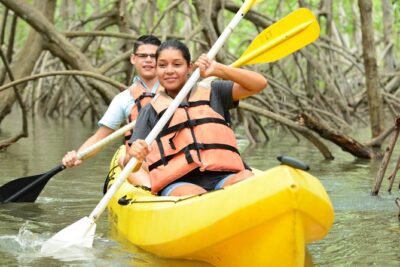
Damas Island Mangrove Kayaking Tour from Manuel Antonio
Read our review →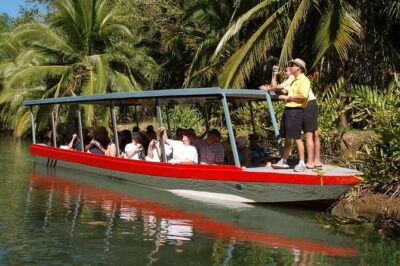
Damas Island Mangrove Boat Tour with Wildlife from Manuel Antonio
Read our review →
Paddle Through Paradise: Mangrove Kayak Adventure
Read our review →
Browse the lists this tour appears in