
Reviewed · SLOTH TOURS
Day Trip from San Jose to Sloths & other wildlife Rescue Center
The most moving part of this half-day trip is not simply seeing a sloth or toucan. It is hearing how each animal arrived at Toucan Rescue Ranch, and learning why some can return to the wild while others must stay under care. Sloths, macaws, parrots, owls, and monkeys all appear in the visit, though the exact residents change.
I like the short ride from San Jose and the fact that hotel pickup, air-conditioned transport, and a private driver are included. I also like the ranch’s clear focus on rehabilitation rather than handling animals for entertainment. The main drawback is price: at $150 per person, this is costly for a four-hour outing, especially since the ranch visit itself joins a small group and the drive is not far from the city.
Key points to know before you book
- The animals come first: Expect education about rescue, rehabilitation, release, and responsible wildlife tourism rather than a hands-on petting experience.
- A sloth may be the star: Past visits have included close, unobstructed views of resident sloths such as Landon, Milo, and Millie, but no particular animal is guaranteed.
- The ranch portion lasts about two hours: That gives you time to hear individual stories and see birds, mammals, and other permanent residents.
- Private means private transport: Your San Jose pickup and ride are private, but the ranch tour itself is conducted with a small group of about ten people.
- The driver can add local context: Oscar, Arturo, Jorge, Nelson, and other drivers have been praised for safe driving and helpful commentary.
- This is a conservation visit, not a photo prop stop: No-contact rules and restrictions on animal selfies may disappoint some visitors, but they protect the animals.
What the four-hour outing feels like
Your day begins at about 9 a.m. with hotel pickup in San Jose. The private driver takes you to Toucan Rescue Ranch in an air-conditioned vehicle, making this an easy choice if you want to see Costa Rican wildlife without giving up most of your day to road travel.
The ride is one reason this outing works well early in a San Jose stay. You do not need to arrange a taxi, navigate unfamiliar roads, or work out how to reach the ranch on your own. Drivers such as Oscar and Jorge have been singled out for being friendly and careful, while Oscar has also taken time to point out parts of downtown San Jose and the Central Market on the return trip.
The booking calls this a private tour, but be clear about what that means. Your transport and driver are private. Once you reach the ranch, you join a small guided group, usually around ten people. That is still a far more personal setup than a large coach tour, but it is not a private guide reserved only for your party.
The visit at the ranch lasts about two hours. Guides lead you through the grounds and explain the work of rescuing injured, abandoned, or otherwise vulnerable native animals. The pace allows time for questions, though the experience is built around listening and observing rather than touching.
More sloth spotting near San Jose:
- Rio Celeste Waterfall at Tenorio Volcano and Sloth Watching Tour From San Jose
★ 4.5 · 60 reviews - Rio Celeste Waterfall Plus Sloths and wildlife Sanctuary
★ 5.0 · 110 reviews - Bogarin Trail Sloth Guided Tour
★ 5.0 · 110 reviews
Meeting sloths at Toucan Rescue Ranch
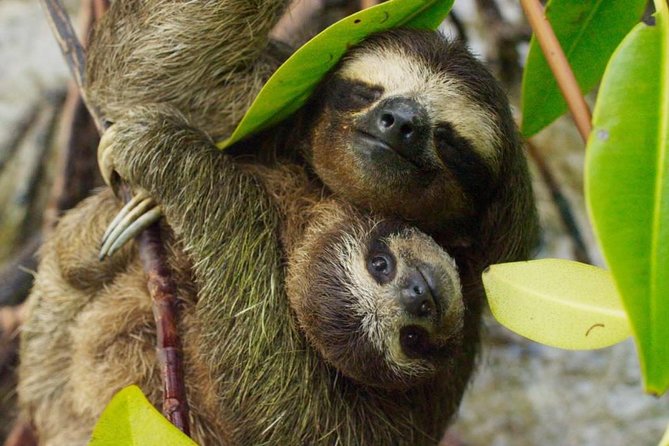
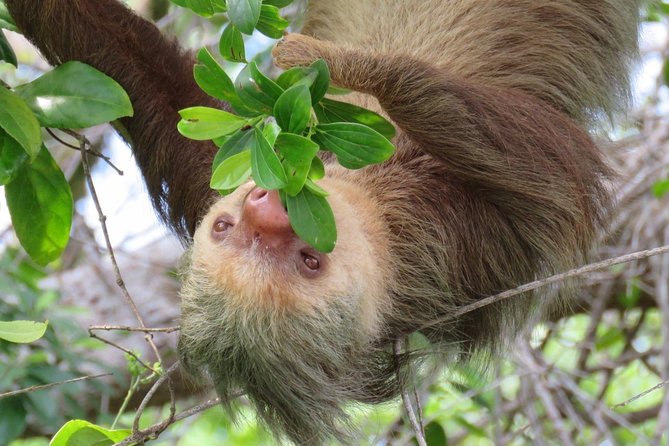
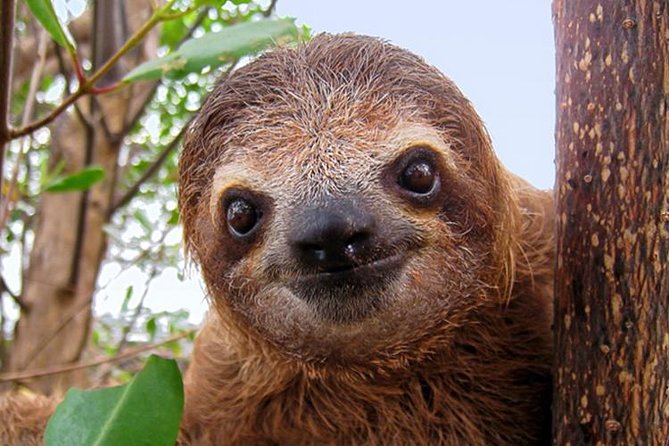
Sloths are the obvious draw, and they can provide the day’s most memorable moment. Past visits have included close views of animals called Landon, Milo, and Millie, as well as a pair of baby two-toed sloths. One special format has included coffee and pastries while the group watched a sloth near its tree.
That detail is worth keeping in mind, but it should not be treated as a promise. The ranch’s residents change, and the animal you see may be different. One visit might feature a single sloth in a nearby enclosure, while another could include a young animal or a particularly good view of a permanent resident.
You should also understand the difference between seeing an animal close up and handling one. The ranch promotes a no-contact approach. You will not be invited to hold a sloth for a photograph, and the staff may discourage selfies even when you are standing in front of an enclosure.
Some people may find those rules strict. I think they make sense for a rescue center. Wildlife sanctuaries can easily slip into the business of turning animals into photo props. Here, the message is that sloths and other animals deserve space, quiet, and a chance to behave as naturally as possible.
The best approach is to bring patience. Sloths move slowly, and other animals may remain shy or out of view. You might see a resident clearly for several minutes, or spend time hearing about an animal that is not currently visible. That is part of a real rescue facility, where animal welfare comes before a guaranteed photo.
Birds, monkeys, and the rest of the residents
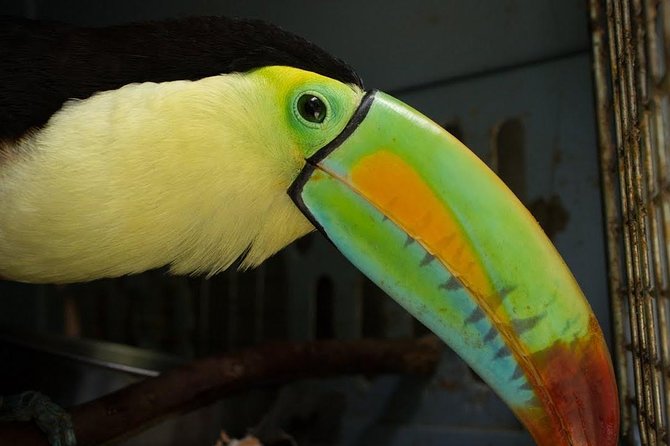
Toucan Rescue Ranch is not only about sloths. The grounds can include toucans, macaws, parrots, owls, spider monkeys, otters, grisons, and other birds and mammals. A clouded oncilla, a small wild cat, has also been among the animals seen on past visits.
The variety gives the tour more depth than a single-animal encounter. Your guide may explain how a bird’s injury affects its ability to fly, why a particular animal cannot return to the forest, or what makes release possible. The individual stories are often more engaging than a general talk about rainforest wildlife.
Guides have included Jos, Joci, Natasha, Javier, Andrea, and Denise. Their roles and exact assignments can change, but the strongest part of the experience is the center guide’s ability to connect names, behavior, and rescue history. Denise, for example, has been praised for explaining the care of young sloths and the goal of eventual release.
The grounds have been described as rustic but well maintained, with roomy, clean enclosures. You do not enter the hospital section, so this is not a behind-the-scenes medical tour. Instead, you see the animals housed in the public areas and learn about the rescue work from the staff.
That limitation is important. If you want access to every part of the operation, this visit may feel incomplete. If you want a respectful public tour that supports the center while showing you permanent residents, the boundaries are easier to accept.
Why the conservation message matters
Costa Rica is known for protecting wildlife, but rescue work still matters because animals can be injured, orphaned, illegally kept, or made unable to survive in the wild. The ranch’s role is to care for these animals and release them when that is safe and possible.
Your guide also explains Costa Rica’s approach to wildlife: native animals should remain in their natural habitat whenever they can. That sounds simple, but it is an important lesson for anyone tempted by close encounters with wild animals.
Some of the presentation may feel direct. The tour can include a video about animal cruelty, a firm explanation of the no-selfie policy, and a request for donations at the end. One critical account found this approach too preachy, particularly because the visitor expected a lighter sightseeing trip.
I would prepare for a serious conservation lesson rather than a purely cheerful animal outing. The center depends on donations and volunteers, and the operator states that a large share of the tour cost supports the refuge. You are paying for transport and guiding, but your visit also helps fund ongoing animal care.
The balance depends on your priorities. If you want entertainment first, the repeated welfare message may feel heavy. If you want to understand why wildlife rescue requires strict rules and steady funding, the message adds real value.
More wildlife days in San Jose:
- Skip the Line:Day Ticket-La Paz Waterfall Gardens Nature Park & Wildlife Refuge
★ 4.5 · 226 reviews - Wildlife Safari Float by Kayak in Peñas Blancas River from Arenal
★ 5.0 · 79 reviews - Damas Island Mangrove Boat Tour with Wildlife from Manuel Antonio
★ 5.0 · 75 reviews - Monteverde Wildlife Walk & Hummingbird Encounter
★ 5.0 · 52 reviews
Is $150 per person a fair price?
The price is $150 per person. That includes hotel pickup and drop-off, private air-conditioned transport, a private driver, a professional guide, taxes, fees, admission, and the small-group ranch tour.
That is a high price for approximately four hours, especially because Toucan Rescue Ranch is a short trip from San Jose rather than a distant rainforest destination. One person could reasonably decide to arrange transport independently and give more money directly to the ranch.
The value is easier to defend if you want convenience. You get door-to-door service, someone else handles the driving, and your visit is arranged around a set entry. For a couple or family that does not want to plan local transport, the simplicity may be worth paying for.
The donation element also changes the calculation. The operator says 65 percent of the tour cost goes to the refuge. I would still compare prices before booking, since the exact value depends on your group size, hotel location, and how much you value private transport.
This is not the best pick for a strict budget. It is a better fit for someone who wants a short, organized wildlife visit and is comfortable paying extra to support a rescue organization.
Guides and the quality of the explanation
The driver and ranch guide play different roles. Your driver handles pickup, transport, and general Costa Rica information. The ranch guide explains the animals, their backgrounds, and the center’s work.
Names such as Oscar, Arturo, Jorge, Nelson, and Daniel appear in especially positive accounts of the driving and commentary. Daniel has been praised for identifying flowers, snakes, and birds, while Oscar has been described as friendly and reassuring for a solo visitor.
At the ranch, guides such as Jos, Natasha, Joci, Andrea, and Denise have been praised for answering questions and explaining the animals by name. The strongest guide experience is not just a list of species. It is the story of how a particular animal came to the center and what its future may be.
Still, guide quality can vary by assignment. The visit is more educational when the guide gives each enclosure time and answers questions clearly. If you prefer to wander silently and take photographs, the guided structure may feel less flexible.
The tour’s educational tone is a strength, but it also sets expectations. You are not simply being escorted from cage to cage. You are being asked to think about rescue, release, captivity, and the damage caused by treating wild animals as pets.
Practical details for your morning
The listed start time is 9 a.m., and hotel pickup and drop-off are included. Confirmation is provided at booking, and the experience is private in transport, with only your group sharing the vehicle.
Dress is listed as smart casual. Practical clothing is still the sensible choice for walking around a rescue center. Wear shoes you can use comfortably on rustic grounds, and bring whatever protection you normally want for a warm, wet-weather climate.
Most people can participate, and service animals are allowed. The ranch is near public transportation, but this package is built around included pickup, so you do not need to solve the local transport question yourself.
The experience requires good weather. If poor weather cancels the outing, you are offered another date or a full refund. Otherwise, cancel at least 24 hours before the 9 a.m. start for a full refund. Changes or cancellations inside that window are not accepted.
The center’s animal population is fluid. Do not book this expecting a particular sloth, bird, or wild cat. Book it to learn about rescued Costa Rican wildlife and to see whichever residents are ready for public viewing that day.
Who should book this rescue center visit?
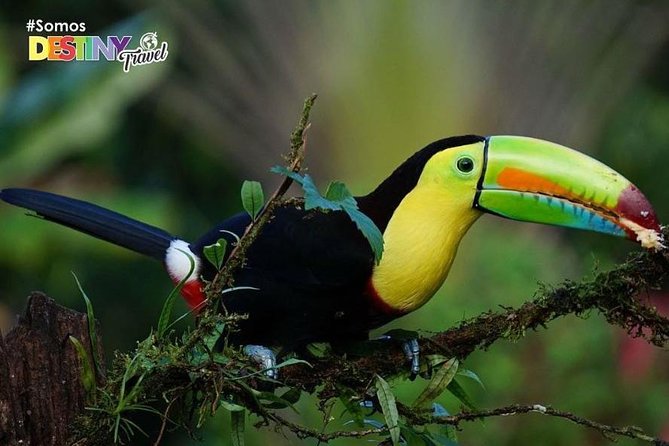
I would recommend it to families who want an educational wildlife activity without a long drive, couples looking for a meaningful half-day outing, and solo visitors who value arranged transport and a reassuring driver.
It also suits first-time visitors who have not yet had a clear look at sloths or toucans in the wild. Seeing a rescue animal is not the same as seeing wildlife in its natural habitat, but the ranch offers a much more reliable view and explains the limits of captive care.
You should think twice if your main goal is a cheap animal photo, a hands-on encounter, or a private tour from beginning to end. The no-contact rules, conservation videos, donation request, and small-group ranch format may not match that style of outing.
I also would not choose this as a substitute for a full wildlife trip outside San Jose. The ranch gives you access to rescued animals and useful conservation context, but it is not a national park expedition or a rainforest hike.
Should you book it?
Book this tour if you want easy San Jose pickup, close views of rescued wildlife, and a serious lesson in animal care. The two-hour ranch visit is the heart of the experience, and the stories behind the animals give it more meaning than a standard zoo visit.
Skip it, or arrange your own visit, if $150 feels too high for a short outing and you are comfortable managing transportation yourself. Either way, go with the right expectations: this is a conservation center with strict animal welfare rules, not an animal selfie attraction.
For families, first-time Costa Rica visitors, and anyone who wants to support rescue work while seeing sloths and toucans, it is a worthwhile half-day choice. For budget-minded visitors, the price deserves careful comparison.
FAQ
How long does the tour last?
The experience lasts approximately four hours, including transportation from San Jose and the ranch visit.
What time does the tour begin?
The listed start time is 9 a.m.
Is transportation included?
Yes. Hotel pickup and drop-off are included, along with private transport in an air-conditioned vehicle.
Is the entire tour private?
Your transportation and driver are private, but the ranch visit takes place with a small group. The group may include about ten people.
What animals might I see?
The ranch may have sloths, toucans, parrots, macaws, owls, spider monkeys, and other rescued birds and mammals. The animals present can change, so no particular species or individual is guaranteed.
Can I cancel for a refund?
You can cancel at least 24 hours before the experience begins for a full refund. Cancellations or changes made less than 24 hours before the start time are not accepted. If poor weather causes the operator to cancel, you can choose another date or receive a full refund.
Just added around San Jose
- Special Private Waterfalls and Jungle Safari Tour★ 5.0 · 40 reviews
- Super Combo Tour: Waterfalls Gardens + Coffee Tour + Poás Volcano★ 4.5 · 39 reviews
- Shuttle from San Jose to La Fortuna★ 4.5 · 54 reviews
- Rafting Sarapiqui River Class II-III Costa Rica★ 5.0 · 55 reviews
- Queveri Horseback Riding Tours★ 5.0 · 35 reviews
- Driver in Costa Rica for 10 Hours (Luxury Package)★ 5.0 · 32 reviews
- San Jose City Tour. Private Tour with lunch★ 4.5 · 40 reviews
- 3 in 1 Combo: La Fortuna Waterfall, Hanging Bridges, Thermal Spa from San José★ 5.0 · 42 reviews
Sloth Tours, compared.
Rio Celeste Waterfall Plus Sloths and wildlife Sanctuary
Read our review →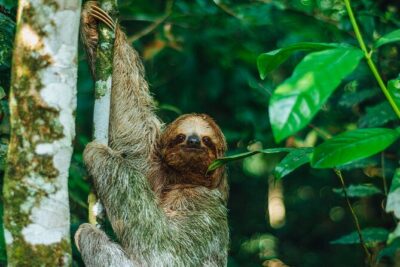
Sloth Tour in La Fortuna and Tortillas Cooking Class
Read our review →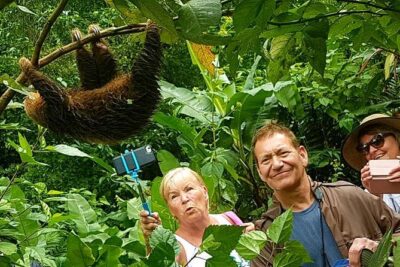

Coffee & Chocolate Tour+Sloths Park & Llanos de Cortez Waterfall
Read our review →
Rio Celeste Expedition – Sloths, Waterfalls & Nature’s Magic
Read our review →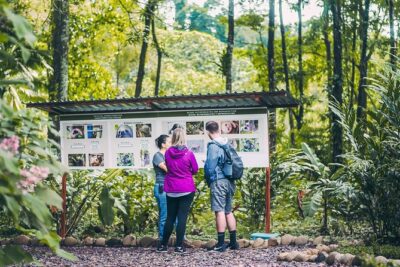
Browse the lists this tour appears in