
Reviewed · CHOCOLATE TOURS
Chocolate Making and Tasting at a Local Factory in San José
The best part of this San José workshop is that chocolate begins before the bar. You taste fresh cacao fruit, beans, nibs, cocoa powder, and cocoa butter, then follow the process into finished chocolate. It is a hands-on lesson, not just a tasting counter.
I like the personal scale and the chance to make chocolate to your own taste. Mauricio is often the host, and his patient explanations, easy humor, and willingness to answer questions give the session a friendly feel. I also like the final packaging activity, which turns your chocolates into a useful souvenir rather than a snack you forget by the next morning.
The main thing to check is group size. The experience is described as small, with a maximum of eight in the highlights, yet the additional information lists up to 12, and one session reportedly had around 20 people. A larger group can slow down the making portion, so confirm the expected size if close guidance matters to you.
Key points to know before booking
- Taste cacao at nearly every stage: Begin with fresh fruit, then compare beans, nibs, powder, butter, drinks, and finished chocolate.
- Make your own creations: Choose from more than 15 fillings and toppings, then shape and decorate your chocolates.
- Meet in Barrio Escalante: The workshop is at Tapir Chocolates in one of San José’s food-focused neighborhoods.
- Plan for about two hours: The session begins at 3:00 pm and ends back at the workshop.
- Take home an edible souvenir: Eco-friendly boxes, paper, stickers, and other materials let you package your own work.
- Watch the group-size details: Most accounts describe a small class, but the published limits are not fully consistent.
From cacao fruit to finished chocolate in two hours
This experience works because it gives you the whole chain, not only the sweet final product. At the start, the instructor introduces cacao’s place in the Americas and explains how the fruit becomes something most of us know only as a chocolate bar.
You begin by tasting fresh cacao fruit. This is one of the more unusual parts of the class. The fruit has a different character from processed chocolate, and trying it first gives you a useful reference point for everything that follows.
Next come cacao seeds in different stages of processing. You taste nibs, cocoa powder, cocoa butter, and cacao drinks, then compare chocolate with different cocoa concentrations. The order matters. You can connect changes in texture and flavor to roasting, grinding, pressing, and mixing instead of treating chocolate as one fixed ingredient.
I like this portion best for adults who want context as well as sugar. It also gives children and teenagers something concrete to focus on. They are not simply watching a demonstration. They are comparing ingredients with very different tastes and textures.
The historical introduction is brief rather than a long lecture. That is a good fit for a two-hour workshop. You get enough background to understand cacao’s cultural role in the Americas, then move quickly to tasting and making.
More cacao and chocolate farms near San Jose:
- Chocolate and Coffee Tour Farm Don Jorge
★ 5.0 · 113 reviews - Chocolate Experience in Jaco Beach and Los Suenos
★ 5.0 · 85 reviews - Chocolate and Night Tour in La Fortuna
★ 5.0 · 83 reviews
A working chocolate lesson, not a passive demonstration
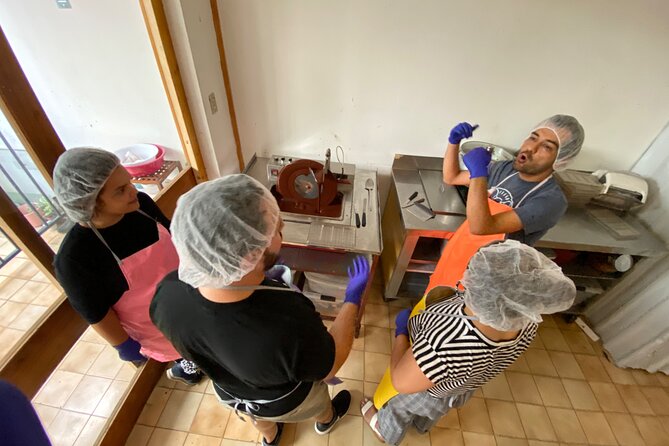
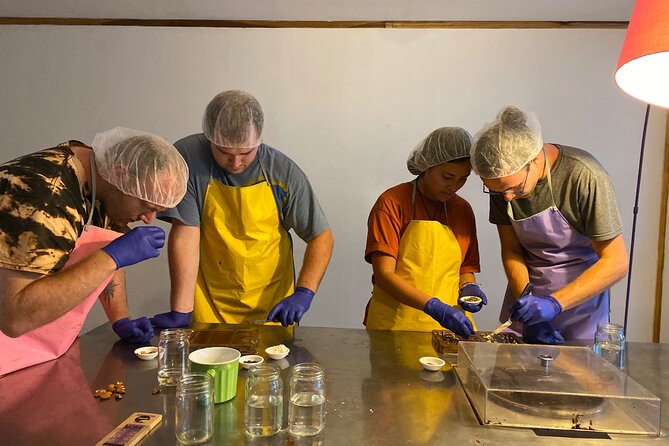
After the tasting, you put the information to work. The equipment includes molds, spatulas, and machines, while aprons, gloves, and other personal supplies are provided. The staff explain the steps and help you work through the process.
You can mix your chocolate with local ingredients and choose from more than 15 fillings and toppings. Depending on the format used that day, you may make bars with different styles of additions, including a topped bar and one with a filling. The exact number of pieces can vary in descriptions, so I would not book this expecting a fixed quantity beyond your personalized creations.
The making stage is where the experience becomes social. You decide what goes into your chocolate, compare combinations with the people beside you, and see how small choices change the result. It is creative without requiring you to know anything about tempering or confectionery before arriving.
Mauricio receives especially strong praise for being patient and helping people who feel unsure about the steps. That matters in a hands-on class. Chocolate work can look simple until you are holding a mold and trying to follow several instructions at once. A good instructor keeps the activity relaxed rather than making you feel as if you are being graded.
The only caution is pace. With a truly small group, you should have more room to ask questions and move through the equipment. With a larger session, you may spend more time waiting for a machine, mold, or turn at a work station. One reported class had at least 20 people, despite the smaller group description, and the chocolate-making portion became slow. Ask about the current group limit if personal attention is central to your decision.
More than 15 fillings and toppings to choose from
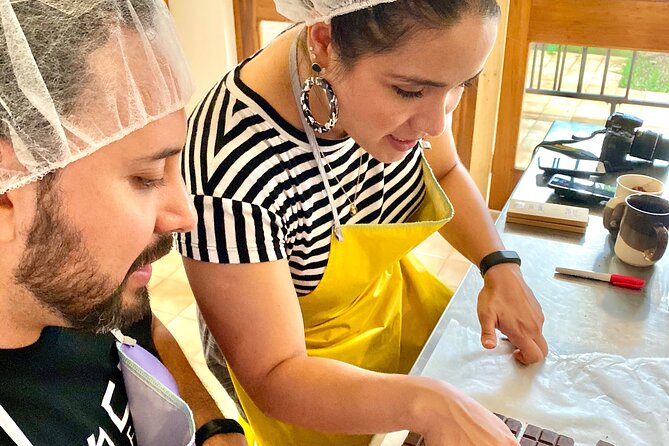
The ingredient selection is a major part of the fun. You can combine the chocolate with local ingredients and select from more than 15 fillings and toppings. This lets you build something that fits your own taste rather than receiving a standard bar prepared in advance.
You might prefer a plain, higher-cocoa chocolate so you can taste the base clearly. You might also choose a sweeter style with several toppings. The workshop gives you room to experiment, and the earlier tasting helps you make an informed choice.
The tasting includes several cocoa concentrations, so you can notice how sweetness and bitterness change. This is useful if you normally buy chocolate by percentage but have never compared several levels side by side.
The session also includes a cacao drink, water, and snacks. Those extras are modest, but they help during a class that moves between tasting, listening, and making. I would still treat the workshop as an activity rather than a full meal, especially since it starts at 3:00 pm.
Some people leave with two finished bars, while other descriptions refer to four chocolates. The safe expectation is that you will make personal chocolate creations and take them with you. If the exact number matters, ask Tapir Chocolates before you arrive.
Why the final packaging is part of the experience
Once your chocolate is ready, you package it yourself. The supplied materials include boxes, wrapping paper, stickers, and other eco-friendly options.
This is a small touch, but it improves the souvenir. You are not handed a generic plastic bag with an anonymous sweet inside. You have made the chocolate, chosen its contents, and then prepared it for the journey home.
The packaging also makes the activity work well for families and groups of friends. Younger participants get another creative task after the food preparation is done, and adults can make the finished item feel personal. It is also practical if you are saving the chocolate for later in your trip.
Keep in mind that the workshop handles chocolate, so your creations may need sensible care after the class. The available information does not specify special transport instructions, storage conditions, or shelf life. Ask the host if you plan to carry the chocolate for several days in Costa Rica.
A few more San Jose half-days worth weighing up
- Poás Volcano and Coffee Tour with Tasting and La Paz Falls
★ 4.0 · 137 reviews - San José: Night Food and Culture Tour with Dinner
★ 4.6 · 107 reviews - Costa Rica Central Valley Wine, Beer, and Mead Tour and Tasting
★ 5.0 · 36 reviews
Meeting at Tapir Chocolates in Barrio Escalante
The workshop begins at Tapir Chocolates, at 10101 San José, in Barrio Escalante. You meet there at 3:00 pm, and the activity ends at the same location.
Barrio Escalante is a useful setting for this kind of afternoon or evening plan. The area has restaurants and places to eat, so you can pair the workshop with dinner afterward. One particularly useful touch is that Mauricio has offered local food and drink suggestions after class, making the experience more helpful if you are still finding your way around San José.
Private transportation is not included. You need to reach the meeting point yourself, though the location is near public transportation. Build in extra time to find the workshop, since one person found the small operation difficult to locate. A map pin and a phone with the confirmation details will be useful.
The 3:00 pm start gives you a clear afternoon plan. With a duration of roughly two hours, you should finish around 5:00 pm, although a larger class could take longer. If you have a dinner booking, airport transfer, or another fixed commitment, leave a buffer rather than scheduling it immediately afterward.
A personal class with one important group-size question
The strongest pattern in the experience is the quality of the instruction. Mauricio is repeatedly described as friendly, patient, and well informed about cacao and chocolate making. He explains the process clearly, responds well to questions, and can adjust his help when someone feels nervous about the practical steps.
Some sessions have been very small, including one with only three people. That creates an almost private-class feeling, with more time for questions and direct help. It also makes it easier to work at your own pace.
But you should not assume every date will be this intimate. The published information gives both a maximum of eight and a maximum of 12, and one account describes a group of at least 20. That mismatch is the main weakness in the booking information.
If you want a quiet, detailed lesson, contact the provider before paying and ask how many people are booked for your date. Families and casual groups may not care as much. Solo visitors and serious chocolate fans probably will.
There is also a language consideration. The class can be explained in multiple languages, which may help mixed-language groups. At the same time, switching between two languages can make the flow feel less direct if you understand only one. Ask which language will lead your session if that affects your comfort.
What the $57.50 price includes
At $57.50 per person, this is not the cheapest chocolate activity in San José. You are paying for more than a tasting: instruction, a full cacao-to-chocolate progression, equipment, protective supplies, snacks, a cacao drink, personal creations, and packaging materials are included.
The value is strongest when you want an activity with real participation. You taste unusual ingredients, learn how they change, make your own chocolate, and leave with something connected to the class. If you only want to sample finished bars, a shop visit would cost less and take less time.
The price also reflects a small local operation rather than a large factory tour. Supporting a local business is part of the appeal, particularly if you prefer activities led by the people who make and work with the product.
Still, the price becomes harder to justify if your session is crowded or rushed. One critical assessment valued the class much lower and preferred another San José option. That person also left early, which likely reduced the practical part of the workshop, but the concern about organization is worth taking seriously.
I would call the price fair for a small, complete class with close instruction. I would be less enthusiastic if the group limit is unclear or if you have a tight schedule that prevents you from completing the activity.
Who will get the most from this workshop
I would recommend this to families with older children, couples, friends, solo visitors, and anyone who enjoys food activities with a creative element. You do not need prior chocolate-making experience.
It is also a good choice for a final evening in San José. The workshop ends near restaurants in Barrio Escalante, and the chocolates provide a physical reminder of your time in Costa Rica.
Food enthusiasts will appreciate the progression from fruit to finished product. People who enjoy craft demonstrations may like seeing the equipment and handling the ingredients. It suits curious beginners more than visitors looking for an advanced professional pastry course.
I would think twice if you dislike sweet foods, want a formal factory tour with a large production line, or need to leave exactly at a set time. The class is built around tasting and participation, and the pace may depend on the size of the group that day.
Service animals are allowed. The activity is near public transportation, but private transport is not included. Confirmation is provided at booking. You can cancel for a full refund up to 24 hours before the 3:00 pm start, while cancellations or changes inside that window are not refundable.
Should you book Tapir Chocolates?
Book it if you want to understand cacao through taste and touch, not just buy a finished souvenir. The fresh fruit tasting, wide range of cacao stages, personal chocolate creations, and eco-friendly packaging give the two hours a clear purpose.
Before booking, ask about the number of people in your session and the language of instruction. That one check can determine whether you receive the close help that makes the $57.50 price feel worthwhile.
I would choose this workshop for a relaxed afternoon in Barrio Escalante, especially with family or friends. I would skip it if you want the lowest-cost chocolate class, have a strict departure time, or cannot confirm a manageable group size.
FAQ
Where does the chocolate workshop take place?
It takes place at Tapir Chocolates, at 10101 San José, San José, Barrio Escalante, Costa Rica.
What time does the activity start?
The stated start time is 3:00 pm.
How long does the workshop last?
The experience lasts approximately two hours and ends back at the meeting point.
What will I taste during the class?
You taste fresh cacao fruit, cacao seeds at different processing stages, nibs, cocoa powder, cocoa butter, chocolate drinks, and chocolates with different cocoa concentrations.
Do I make my own chocolate?
Yes. You make chocolate creations using equipment such as molds and spatulas, then combine the chocolate with local ingredients, fillings, and toppings.
How many fillings and toppings are available?
More than 15 fillings and toppings are available for your chocolate creations.
Is packaging included?
Yes. Eco-friendly packaging materials such as boxes, wrapping paper, and stickers are included.
Is transportation included?
No. Private transportation is not included. The meeting point is near public transportation.
What is the cancellation policy?
You can cancel at least 24 hours before the start time for a full refund. Cancellations or changes made less than 24 hours before the activity are not accepted for a refund.
Just added around San Jose
- Special Private Waterfalls and Jungle Safari Tour★ 5.0 · 40 reviews
- Super Combo Tour: Waterfalls Gardens + Coffee Tour + Poás Volcano★ 4.5 · 39 reviews
- Rafting Sarapiqui River Class II-III Costa Rica★ 5.0 · 55 reviews
- Queveri Horseback Riding Tours★ 5.0 · 35 reviews
- Shuttle from San Jose to La Fortuna★ 4.5 · 54 reviews
- Driver in Costa Rica for 10 Hours (Luxury Package)★ 5.0 · 32 reviews
- San Jose City Tour. Private Tour with lunch★ 4.5 · 40 reviews
- 3 in 1 Combo: La Fortuna Waterfall, Hanging Bridges, Thermal Spa from San José★ 5.0 · 42 reviews
Chocolate Tours, compared.
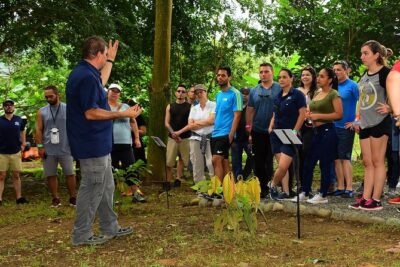
Chocolate Experience in Jaco Beach and Los Suenos
Read our review →
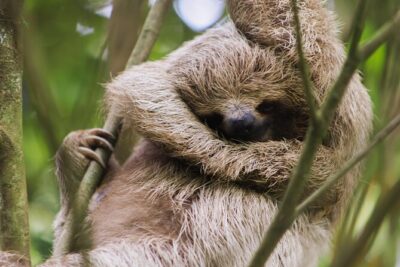
Coffee & Chocolate Tour+Sloths Park & Llanos de Cortez Waterfall
Read our review →
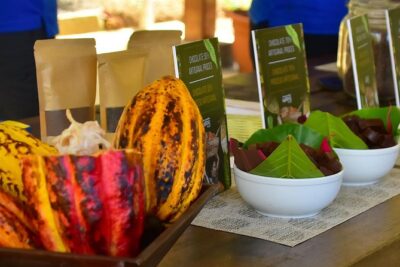
Ocean View Canopy Zip line + Chocolate Experience
Read our review →
Browse the lists this tour appears in