
Reviewed · TURTLE NESTING TOURS
Observation of Turtles in their Natural Habitat in Tortuguero
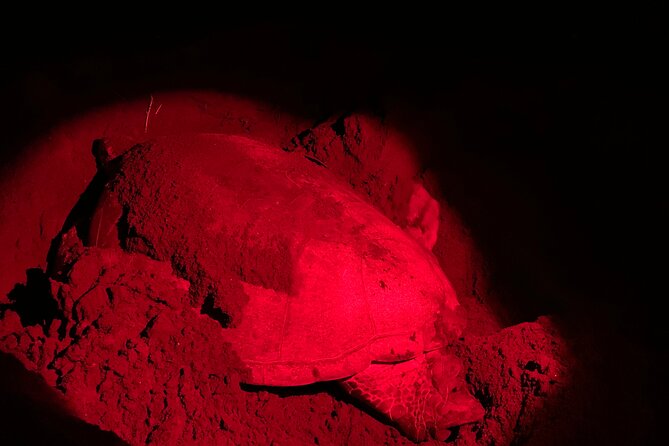
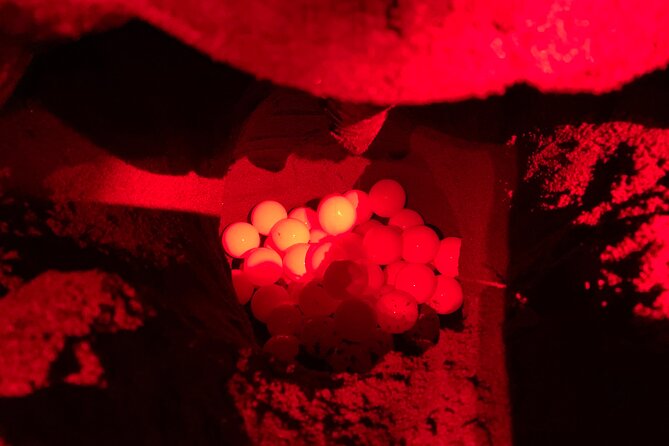
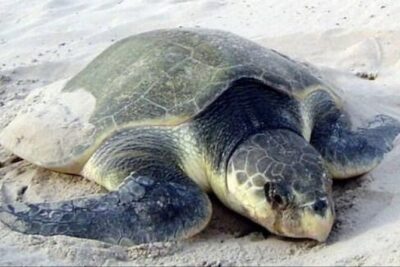
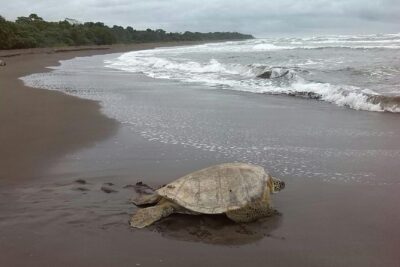
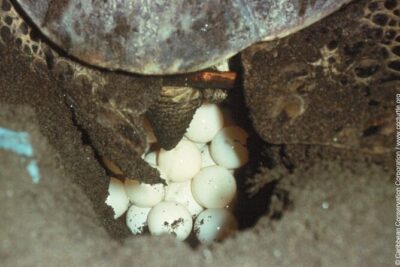
Seeing a huge green turtle crawl from the Caribbean surf, settle into the sand, and lay more than 100 eggs is the heart of this night tour in Tortuguero. You follow dark trails to waiting posts, then enter the beach only when the guides and protection association allow it.
I like the small maximum of 10 people, which keeps the group easier to manage. I also like the chance to see several parts of nesting, from emerging from the sea to covering and hiding the nest. The tradeoff is strict: you must wear dark clothing, leave phones and cameras behind, and accept that turtle sightings are never guaranteed.
Key points to know before booking
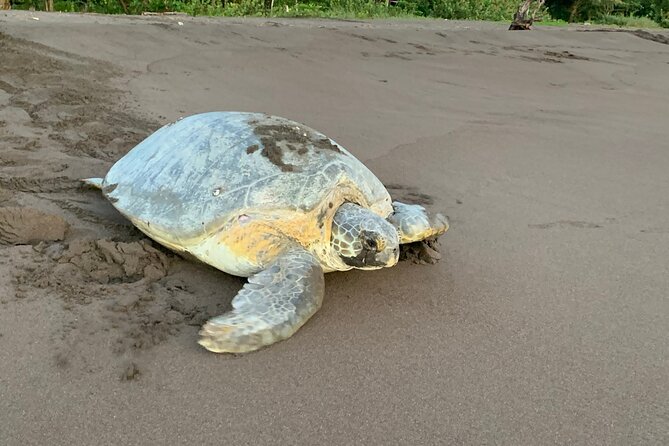
- Green turtles may come ashore to nest, lay eggs, cover them, and camouflage the sand.
- The beach is carefully regulated, with groups waiting before entering at the right moment.
- Luis and Carmen are named guides who can explain the turtles and answer questions during the walk.
- The group is limited to 10 people, a useful size for a sensitive wildlife activity.
- No cameras, phones, or other devices are allowed on the beach, so this is a memory-first experience.
- The tour runs from 7:00 PM to 9:00 PM, from June 1 through October 31, 2026.
Why Tortuguero’s turtle watch feels different
This is not a wildlife show with animals trained to appear on cue. You walk at night, wait quietly, and follow rules designed to limit disturbance. The reward is seeing a wild sea turtle carry out a natural process in the place where it will lay its eggs.
The sight can be surprisingly dramatic. A green turtle may appear from the surf, pull itself across the sand, and begin preparing a nest. Once it is ready, you might see it deposit a large clutch of eggs, cover the nest with sand, and use its flippers to make the area harder to spot.
One account describes more than 100 eggs being laid and then carefully hidden. That detail gives you a better idea of what makes this outing special. You are not simply looking at a turtle. You may see a complete section of the nesting process.
The timing also matters. Turtle watching takes place at night because that is when nesting occurs, but it also means you should expect darkness, walking, waiting, and limited visibility. If you prefer fast-moving activities, this may feel slow. If you enjoy watching nature on its own schedule, the pace is part of the point.
More turtle nesting nights in Tortuguero:
- Turtle Nesting night Tour in Tortuguero
★ 4.5 · 71 reviews - Turtle Tour
★ 5.0 · 71 reviews - The best of Tortuguero: Canoe, hike and night tour (turtle in Jul-Oct)
★ 4.5 · 42 reviews
The 7:00 PM meeting and night walk
The activity begins in Tortuguero at 7:00 PM and lasts about two hours. You start with the guide and group, then walk along trails at night toward designated waiting posts near the beach.
The walk requires a moderate level of fitness. The tour is not recommended if you have walking problems, and you should be comfortable moving in the dark for part of the evening. The information provided does not give a precise trail distance or surface description, so ask the operator if you need details about the route before booking.
At the waiting posts, patience becomes important. Groups do not simply rush onto the sand. You wait until the turtles are ready to be observed and until entry is allowed. This system can mean several groups are present at the same time, but the protected beach rules help keep the process organized.
That regulation is a major strength. It may limit your freedom and make the evening feel more structured, but it also protects the turtles from crowds and unnecessary disturbance. The goal is not to get as close as possible. The goal is to watch without interfering.
What you might see on the beach
Once the group is permitted to enter, the guide leads you toward the nesting area. The exact sighting depends on turtle activity that evening. You may see a turtle arrive from the water, prepare a nest, lay eggs, cover the hole, or camouflage the area before returning to the sea.
The most memorable moments are likely to be the simplest ones: the slow movement up the beach, the pause while the turtle works, or the rhythmic motion used to cover the eggs. You need to follow the guide’s instructions closely, since the rules exist for the animal’s protection.
The tour description presents nesting as a possibility, not a promise. That distinction matters. Nature may give you a full nesting sequence, a shorter sighting, or no close observation at all. The $40 price buys access to a carefully managed wildlife outing, not a guaranteed performance.
I appreciate that the experience does not depend on taking a picture. Cameras, mobile phones, and other technological devices are not allowed on the beach. This may disappoint anyone hoping for a dramatic social media image, but it also removes the temptation to use a flash, make noise, or focus more on a screen than on the turtle.
You will need to remember what you see rather than record it. For some people, that is a drawback. For me, it fits the setting. A quiet beach, a wild turtle, and no glowing phones can make the moment feel more personal.
Guides Luis and Carmen help give the evening shape
The named guides connected with this experience include Luis and Carmen. Carmen is described as explaining the turtles clearly and answering questions in a good-humored way. Luis is also associated with the organization of the tour and is praised for his professionalism.
That combination matters on a wildlife outing. You want someone who can explain what you are seeing without turning the beach into a lecture, and you need someone who can manage the practical side of timing and group movement. The information provided suggests that both the educational and organizational sides are taken seriously.
Ask questions during the walk and at the waiting area, when conversation is appropriate. Once the group is on the beach, quiet and obedience to instructions matter more than discussion. The guide’s job is not only to point out turtles. It is also to help you observe them without getting in their way.
The guides can also help make sense of the nesting stages. If a turtle is seen laying eggs, you will have a better understanding of what is happening than you would from simply watching a large animal move across the sand.
Same base, a completely different kind of day:
- Small-Group Tortuguero National Park Night Walk in Costa Rica
★ 5.0 · 91 reviews - Canoe tour dentro del Parque
★ 5.0 · 86 reviews - Adventure Canoe Tour in Tortuguero
★ 5.0 · 78 reviews - Kayak Tour
★ 5.0 · 76 reviews
Why the group limit of 10 matters
The maximum group size is 10 people. That is a sensible limit for a wildlife activity where noise, movement, and crowding can affect the animals.
A small group should also make it easier to hear the guide and keep track of instructions. It does not mean you will have the beach to yourself. Other groups may be operating under the same protection system, and several tours can leave at similar times. Still, a 10-person cap is more manageable than a large crowd.
The regulated system may mean you spend time waiting with other groups before reaching the beach. That is not necessarily a flaw. It is the price of allowing many people to see turtles while controlling how and when they approach the nesting area.
If you are looking for a private, completely flexible outing, this may not suit you. If you accept shared access and clear rules in exchange for a better chance of observing turtles responsibly, the arrangement makes good sense.
Clothing and equipment rules are not optional
Wear dark clothing. White and other light colors should be avoided completely. This is one of the most important practical details to handle before you leave your accommodation.
You also cannot use cameras, phones, or other technology on the beach. Do not count on taking a quick picture once you arrive. Keep devices away as instructed, and prepare yourself to watch rather than document.
The provided details do not specify additional equipment, so you should not assume that a particular item is supplied. The key requirements are simple: dark clothes, the ability to walk at night, and a willingness to follow the beach rules.
The mandatory purchase of a decal or peganita is also part of taking the turtle tour. The wording does not make clear if this is included in the $40 price, so confirm the cost when booking and carry the required item as instructed.
Is $40 a fair price?
At $40 per person, the tour is reasonably priced for a two-hour, guided wildlife outing, especially with a maximum of 10 people. You are paying for the guide, organized access, and a chance to observe nesting under a controlled system rather than for entertainment built around a guaranteed sighting.
The value depends on your expectations. If you want a certain turtle encounter and a stack of photographs, the restrictions may make the price feel less attractive. If you value conservation rules, professional guidance, and the chance to see a natural nesting process, the cost is easier to justify.
Private transportation is not included. You need to arrange your own way to the meeting point in Tortuguero, and the activity ends back there. Build that into your evening plan rather than assuming the tour will collect you from another location.
The tour is offered from June 1 through October 31, 2026, every day from 7:00 PM to 9:00 PM. It is wise to book ahead, since the activity is often reserved about 36 days before the date. That planning window is especially useful if your Tortuguero schedule is short.
Weather, cancellation, and physical effort
The experience requires good weather. If poor weather causes cancellation, you will be offered another date or a full refund. You can also cancel for a full refund up to 24 hours before the start time.
Inside that 24-hour window, cancellations and changes are not accepted for a refund. Cutoff times follow local time in Tortuguero, so do not wait until the last moment if your plans change.
The moderate fitness requirement deserves equal attention. You walk on trails at night and may need to wait before entering the beach. The tour is not recommended for people with walking problems, and the provided information does not promise special accessibility arrangements.
I would choose a different activity if walking at night is difficult or uncomfortable. For everyone else, the physical demand sounds manageable, but you should still be ready for an outdoor walk rather than a short, seated viewing.
Who should book this Tortuguero turtle tour?
I would recommend it to anyone who wants a close look at turtle nesting without expecting a staged show. It suits people who can follow quiet observation rules, accept the possibility of waiting, and appreciate the conservation reasons behind the restrictions.
It is especially appealing if you want to see more than a turtle crossing the beach. The possibility of watching egg-laying, nest covering, and camouflage gives the outing real depth.
Families and groups should make sure everyone understands the no-phone rule and the need for dark clothing before booking. The small group limit is helpful, but the tour still requires cooperation from every person.
I would hesitate to book it if your main goal is photography, if you cannot walk comfortably at night, or if you need a guaranteed sighting. The tour is built around wild animals and controlled access. That uncertainty is honest, but it is still uncertainty.
Should you book it?
Yes, if you are in Tortuguero during the June through October season and want a carefully managed chance to see green turtles nesting. The strongest reasons are the small 10-person limit, the possibility of seeing several nesting stages, and the guides’ role in explaining and organizing the visit.
Go in with dark clothes, no camera, reasonable walking ability, and patience. If you can accept those conditions, $40 is a fair price for a rare wildlife moment that does not ask the turtles to perform for you.
FAQ
Where does the turtle observation tour begin?
It begins in Tortuguero, in Costa Rica’s Limón Province.
Where does the activity end?
The tour ends back at the meeting point in Tortuguero.
How long does the turtle tour last?
The activity lasts approximately one to two hours. The scheduled time is 7:00 PM to 9:00 PM.
When is the tour available?
It is available daily from June 1 through October 31, 2026.
What is the maximum group size?
The activity allows a maximum of 10 people.
Can I use my phone or camera on the beach?
No. Cameras, mobile phones, and other technological devices are not allowed on the beach.
What should I wear?
You must wear dark clothing. White clothing and similar light colors should be completely avoided.
Is the tour suitable for people with walking problems?
No. The activity requires a moderate level of physical fitness and is not recommended for people with walking problems.
What happens if bad weather cancels the tour?
You will be offered another date or a full refund. You may also cancel up to 24 hours before the start time for a full refund.
Just added around Tortuguero
- The best of Tortuguero: Canoe, hike and night tour (turtle in Jul-Oct)★ 4.5 · 42 reviews
- Relaxing Canoe Tour in Tortuguero★ 4.5 · 48 reviews
- Canoe experience exploring Tortuguero National Park★ 5.0 · 54 reviews
- Small Group Tortuguero National Park Canoe Tour★ 5.0 · 53 reviews
- Canoe Boat Tour in Tortuguero Canal★ 5.0 · 56 reviews
- 3-hour canoe tour through Tortuguero National Park★ 5.0 · 68 reviews
- Turtle Nesting night Tour in Tortuguero★ 4.5 · 71 reviews
- Turtle Tour★ 5.0 · 71 reviews
Turtle Nesting Tours, compared.
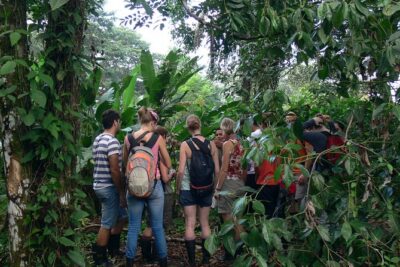
The best of Tortuguero: Canoe, hike and night tour (turtle in Jul-Oct)
Read our review →Browse the lists this tour appears in